STEM Toys for Ages 6-8
Disclosure: This page contains affiliate links. If you buy through them we may earn a commission at no extra cost to you. As an Amazon Associate I earn from qualifying purchases. Details.
Six to eight is when many kids can follow multi-step instructions, read simple directions, and stick with a project longer. It's a great age for kits that build toward something, as long as the steps aren't so hard that an adult ends up doing it all. We haven't tested specific products; this page helps you choose a category that fits the child.
Start with the child's interest
| If they love... | Try | Why it works |
|---|---|---|
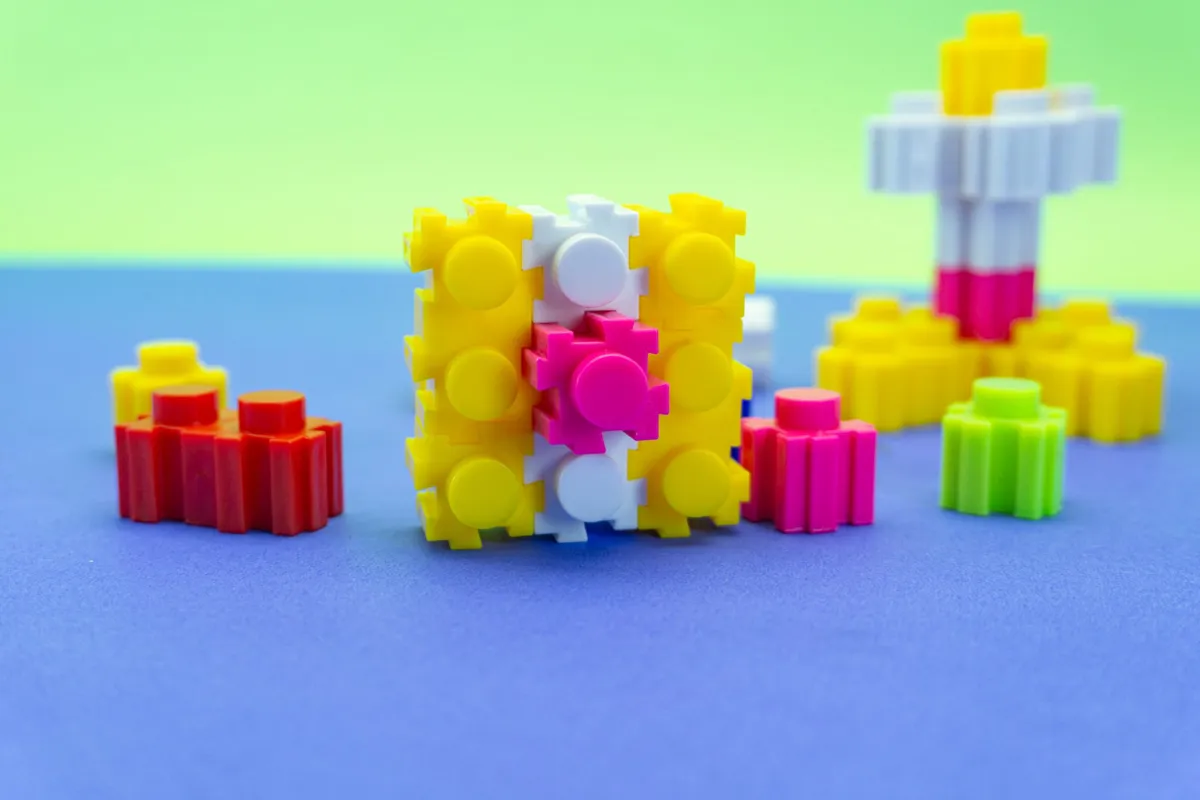
| Building and LEGO-style play | Construction or engineering kits with moving parts | Builds on a skill they enjoy |
| Bugs, rocks, and nature | Rock and fossil dig kits, bug-catching kits, microscopes for kids | Real objects to examine |
| Mixing and "experiments" | Kitchen-chemistry or slime-science kits | Hands-on cause and effect |
| Games and puzzles | Logic puzzles and strategy board games | Thinking skills disguised as play |
| Gadgets and robots | Beginner coding robots | Instant feedback |
| Art | Circuit art or light-up craft kits | Combines creativity with electronics |
Ideas by category
Building and engineering
- Construction sets with gears, axles, and motors let kids build things that move. Engineering kits → Amazon
- Marble run construction sets for designing your own tracks. Marble run sets → Amazon
- Bridge and tower challenge kits.
Science
- Rock, crystal, or fossil kits. Crystal kits → Amazon · Fossil dig kits → Amazon
- Beginner microscope with prepared slides. Kids' microscopes → Amazon
- Weather station kit. Weather kits → Amazon
- Magnet and electricity kits labeled for this age.
Math and logic
- Logic puzzle games with progressively harder challenge cards. Many single-player logic games are designed for this age. Logic puzzle games → Amazon
- Math-based board and card games. Math games → Amazon
- Tangrams and geometry puzzles. Tangrams → Amazon
Coding
- Screen-free coding robots or board games that teach sequencing and loops.
- Beginner robots programmed with cards or simple apps. See coding robots compared.
What makes a kit a hit at this age
- A quick early win. The first build should work in one sitting.
- Clear instructions, with pictures for kids who are still learning to read.
- Room to go off-script after following the instructions once.
- Reusable parts. One-and-done kits (some science kits) are fun for an afternoon. Construction sets can last years.
- The right challenge. A slightly-too-hard kit plus a willing adult works; a much-too-hard kit ends up in the closet.
Safety
Many kits for this age contain small parts, small balls, or magnets. The CPSC requires choking-hazard warnings on certain toys for ages 3-6 that contain small parts. If there's a younger sibling, set up a "big kid" table and store kits out of reach. For chemistry and science kits, follow the instructions and supervise as the kit directs.
Getting more out of any STEM toy
- Ask, don't tell: "What do you think went wrong?"
- Celebrate failure: a collapsed tower is data.
- Connect to real life: "That's how a real crane works."
- Let them teach you. Explaining is learning.
What to skip
- Kits rated well above their age. Frustration kills interest.
- "STEM" labels on toys with nothing to figure out. The label is marketing; look for what the child actually does.
- Single-use kits as the main gift. Pair them with something reusable.
Ready for more challenge? See STEM toys for ages 9-12.
FAQ
What's a good STEM toy for a 7 year old?
It depends on what they love. Builders tend to enjoy construction kits; curious kids, science kits; puzzle lovers, logic games; and kids who like gadgets, beginner coding robots. Match the interest first.
Are screen-based coding apps okay at this age?
Many families mix screen-free and app-based coding. If screen time is a concern, see our screen-free STEM ideas.
Related guides
- Best STEM Toys for Ages 3-5: What to Look For
- Best STEM Toys for Ages 9-12 (Tweens)
- Coding Robots for Kids Compared: How to Choose by Age