STEM Toys for Ages 3-5
Disclosure: This page contains affiliate links. If you buy through them we may earn a commission at no extra cost to you. As an Amazon Associate I earn from qualifying purchases. Details.
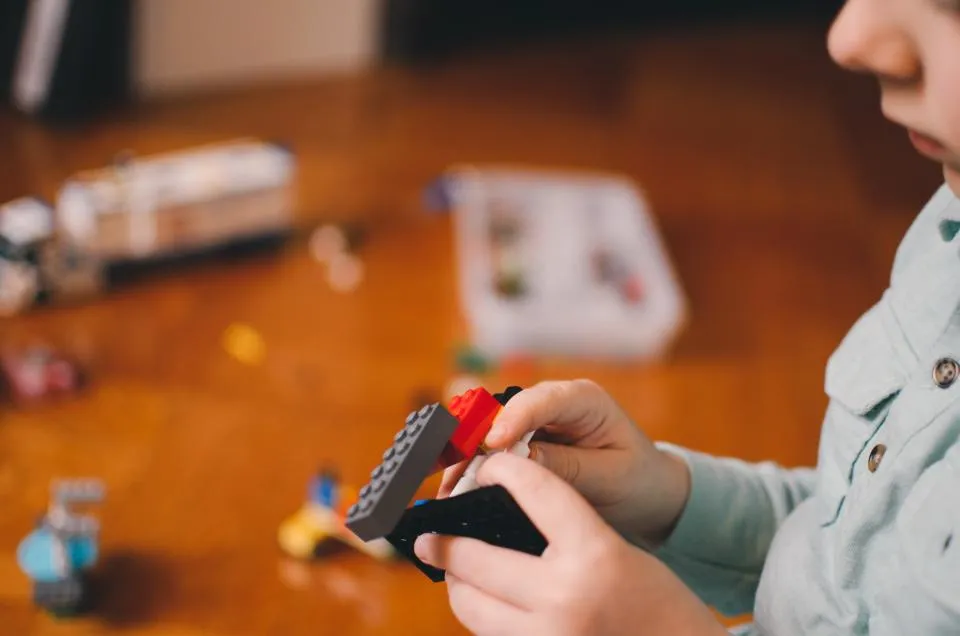
At three to five, STEM play looks like ordinary play: stacking, sorting, pouring, building something and knocking it down. The best toys at this age are open-ended, meaning they can be used many different ways, so a child keeps finding new things to do with them. We haven't run play tests. This guide is a framework built on how these toy categories are typically used.
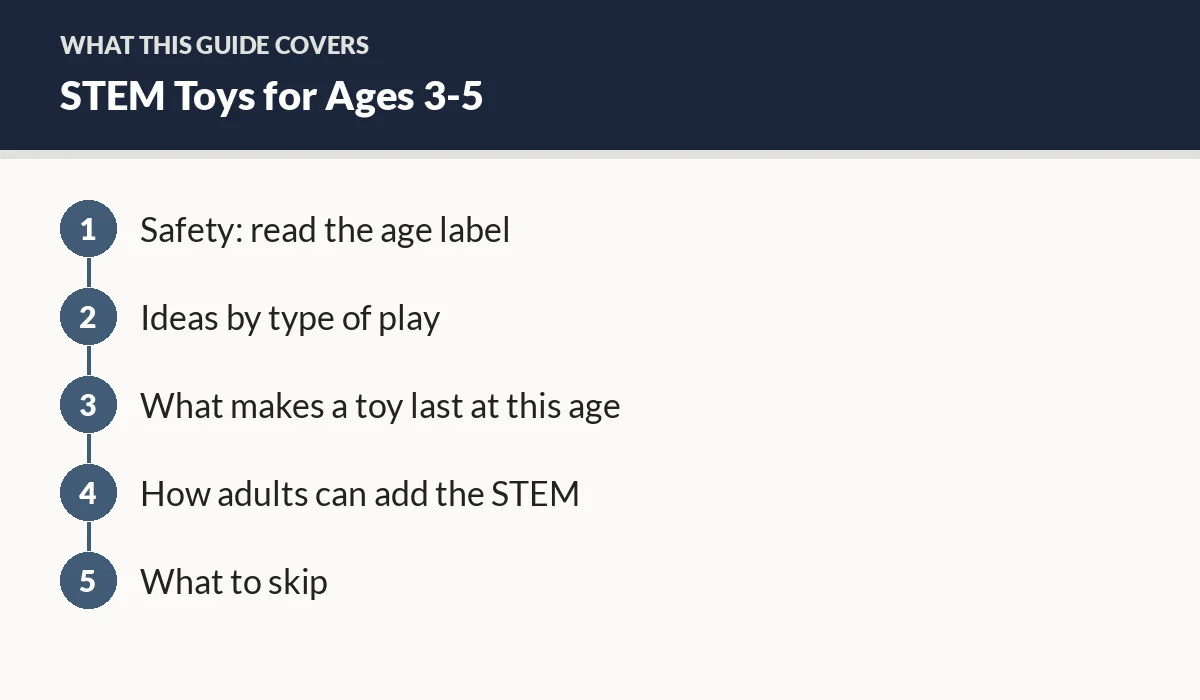
Safety: read the age label
The CPSC's rules shape what's on the shelf for this age:
- Under 3: toys intended for children under 3 can't contain small parts. The CPSC defines a small part as anything that fits entirely into a test cylinder approximating the throat of a child under three.
- Ages 3 to 6: certain toys that are or contain small parts, small balls, balloons, or marbles must carry a choking-hazard warning label.
- Siblings: a kit labeled 3+ may still have parts that are dangerous for a toddler in the same house.
Check the label every time, and favor larger pieces at the younger end of this range.
Ideas by type of play
Building and engineering
- Wooden or foam blocks: the original STEM toy. Block sets → Amazon
- Magnetic building tiles: fast, satisfying structures. Check that magnets are fully enclosed and that the tiles are age-labeled appropriately. Magnetic tiles → Amazon
- Large interlocking bricks sized for small hands. Large building bricks → Amazon
Early math and sorting
- Counting bears and sorting cups: sorting by color and size, counting, and patterns. Counting bears → Amazon
- Pattern blocks: shapes and symmetry. Pattern blocks → Amazon
- Balance scale with objects to compare. Kids' balance scales → Amazon
Science and exploring
- Child-safe magnifying glass or bug viewer for backyard exploring. Bug viewers → Amazon
- Large magnets kit designed for preschoolers. Preschool magnet kits → Amazon
- Water and sand play with funnels, scoops, and cups.
Cause and effect, early engineering
- Marble runs labeled for this age, with large pieces. Many marble runs contain small parts; check the label. Marble runs → Amazon
- Gear sets: turn one gear and watch the others move. Gear sets → Amazon
- Ramps and cars: build ramps and see which car goes farthest.
Early coding concepts (screen-free)
- Screen-free coding toys for preschoolers teach sequencing, such as "forward, turn, forward." See coding robots compared.
What makes a toy last at this age
- Open-ended: blocks get used for years; single-function toys get boring.
- Right difficulty: frustration ends play fast. Match the child, not the box.
- Durable: they'll be dropped, thrown, and chewed.
- Expandable: can you add more pieces later?
- Shared play: many preschool STEM toys work best with an adult asking "What if...?"
How adults can add the STEM
The toy is half of it. Questions do the rest:
- "What do you think will happen if...?"
- "How could we make the tower taller without it falling?"
- "Which one is heavier? How can we find out?"
- "Can you sort these a different way?"
What to skip
- Toys that do everything themselves: lots of lights and sounds, with little for the child to figure out.
- Kits labeled for older kids, even for a "smart" preschooler, especially with small parts.
- Big sets of tiny pieces for a child who still mouths toys.
Growing up fast? See STEM toys for ages 6-8.
FAQ
What counts as a STEM toy for a preschooler?
Anything that invites building, sorting, counting, experimenting, or figuring out how something works. At this age, blocks, magnetic tiles, and simple cause-and-effect toys are classic examples.
Are small parts okay for a 3-year-old?
The CPSC's small parts ban covers toys intended for children under 3. Toys for ages 3-6 that contain small parts must carry a choking-hazard warning. Always check the age label, and keep small parts away from younger siblings.